I love working with people in all kinds of jobs - from young farmers to psychologists to company directors. But most of all I love delivering crisp, clear notes which make your job easier.
I started my notetaking consultancy after many years in print journalism - where the ability
to take accurate, to-the-point notes in any situation is an essential skillset.
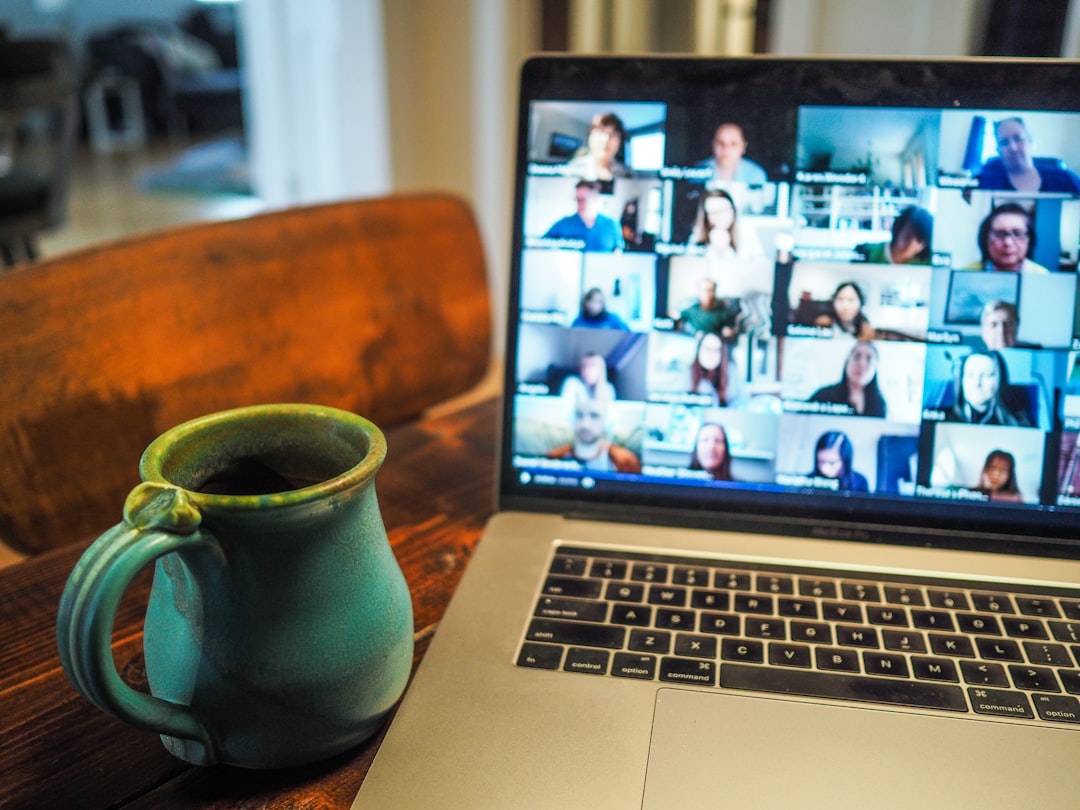
I work in universities to support undergraduate and postgraduate students who are D/deaf/hard of hearing, blind/visually impaired or have other access needs. I provide comprehensive, clearly laid-out notes of lectures, mostly working remotely but sometimes face-to-face. I can attend lectures “live” as they happen or work from recordings posted on a learning portal (Moodle, Blackboard) to provide notes.
I work in professional,
academic, corporate and charity settings where I capture not just
words, but the intent, decisions, and action items of any event. I
mostly work remotely (Zoom, Teams) but sometimes face to face. I can
attend “live” as your meeting happens or work from recordings.
I can provide notes
from training sessions, seminars, workshops, talks, job interviews,
multi-disciplinary team meetings, Board meetings, grievance hearings
- or any other event. These can be very detailed and near-verbatim or
a summary of what was said or formal minutes with action points.
I often work with D/deaf
clients, often alongside BSL interpreters or lipspeakers, as well as
hearing clients.
I am passionate about the future of the notetaking profession which has evolved from a minor administrative task into a specialised service industry. Today, professional notetakers provide essential support in academic, legal, corporate, and medical settings, often bridging the gap between spoken information and accessible records. New technology is changing the way we work and I am part of it. I am an active member of The Association of Notetaking Professionals which is the professional body representing electronic and manual notetakers. I use my experience and expertise to advance the profession whenever I can.
My superpower is being a formally trained and experienced journalist. I can quickly grasp the essence of what is being said by whom, type quickly and meet tight deadlines. Over the years I have picked many soft skills which help me to support my clients.
The ability to filter "noise" (filler words, tangents) from "signal" (decisions, facts).
It’s all about
analysing complex information in real-time. This is especially
important when taking notes of non familiar subjects. For example the
vocabulary used in the study of neurodegenerative diseases is
completely different from that used in a disciplinary hearing for
sexual harassment in the workplace. As a professional notetaker, I
have to step back and look at the big picture. Why is this meeting
being held? Who will use this information and for what purpose? Once
I understand this, then my notes to the client are much useful,
stronger and precise.
I produce accurate, high-quality lecture and meeting notes based on each customer’s specific requirements. Notes can be verbatim or summarised, always delivered promptly and with attention to detail, enabling clients to progress efficiently to their next stage.
As a professional notetaker I am an external party. I am not part of your organisation so can remain neutral. I record what I see and hear without bias.
Timing is critical to my clients, and I fully respect their deadlines. Luckily, I have never missed an agreed delivery date
I comply with GDPR (and NDAs if in place). I also hold an Enhanced DBS, which is on the online automatic update system.
As an active member of my professional body, I can rely on them for up-to-date information about technology, future trends and current rates to give my clients a full professional service.
All my clients are equally important to me. I treat each with utter respect. My terms and conditions spell out exactly what will be delivered, when and for what fee.
I worked with Irma whilst I was at university. She was fantastic, thorough with notes and ensured that they were done in a way that worked for me. I'd highly recommend Irma!
Using a professional Notetaker helps my meetings flow so I can concentrate on the issues to hand. Irma beavers away silently in the background, and then delivers superb notes. I cant ask for more. I highly recommend her.
Our meetings are often busy and noisy. Irma consistently provides accurate records of what is said and delivers her notes promptly. Highly recommend.
Irma is a valued and reliable contributor to our multidisciplinary team meetings. She consistently produces clear, concise, and accurate summary notes, even in complex discussions. Her professionalism, attention to detail, and dependable delivery meet and often exceed expectations. We are very satisfied with her performance and continue to engage her services whenever required.
New to professional notetaking? Curious what it’s all about? Here are a few short headlines and pointers to get you started.
A
Definitive Record: Notes
provide a concrete history of what was said, ensuring memory fades
don't lead to lost information and preventing possible "he-said,
she-said" disputes.
Next
Steps: Beyond
just being a record, notes are the foundation for further study or
project management, task lists, and accountability.
Legal
Requirement: Sometimes formal meetings are legally required to have formal minutes
to a certain standard.
Searchable
Knowledge Base: Over
time, professional notes become a high-quality archive. So instead of
digging through hundreds of emails to find out why a decision was
made six months ago, your team can search a standardised,
professional library of notes.
Supporting
Neurodiversity: For
employees with ADHD, dyslexia, or hearing impairments, having a
high-quality written notes is not just a "nice-to-have" it
is an essential tool for them to perform their jobs effectively.
Bridge
for Absentees: A
professional summary allows team members who couldn't attend to get
up to speed in 5 minutes, rather than listening to a 60-minute
recording or reading a messy, 20-page "speech-to-text"
transcript.
Impartiality &
Objectivity: A professional notetaker only takes notes. They provide
a neutral account free from personal bias or hidden agendas.
Efficiency and Focus: Using a professional notetaker, the participants are free to engage
fully in the meeting or lecture and to focus on strategy and
participation. This prevents multi-tasking that lowers the quality of
both the conversation and the record.
Cost-Effectiveness: While there is an upfront cost, the long-term return on investment is
high, by avoiding the cost of miscommunication, forgotten tasks, or
by professionals using time on notes that is better spent elsewhere.
Security: Because
notetakers are used to handling handle sensitive data and have
expertise in data privacy laws and compliance with security and
safeguarding.
Timely: A professional
note-taker will deliver notes within 24–48 hours, or sooner by
agreement in urgent cases.
It isn’t a battle
between humans and machines. It’s about judgment. While AI is a
useful tool in some circumstances, human notetakers remain superior
for several reasons:
Contextual
Intelligence: AI doesn't understands nuance. For example, a notetaker
can distinguish between a suggestion and a firm decision; ensuring
the final document reflects the actual consensus of the room.
Reasoning over
Transcription: AI creates a data dump. So, if for example one of
the participants is a “waffler” an AI program will try to
transcribe every word, resulting in a massive file of nonsense, which
has to be summarised somehow. A human note taker can filter
out the important points from the “waffle” while the meeting or
lecture is live.
Accuracy and Context: AI often struggles with accents, technical jargon or overlapping
voices. A human understands the context of a conversation and can
clarify ambiguous points.
Intellectual property
and Security: Unless you take positive action, some AI programmes may
scrape your data and use it commercially without your consent. This
is especially sensitive when dealing with personal issues in,
for instance, HR or medicine . A professional notetaker is bound by NDAs, GDPR
and must hold an enhanced DBS for certain categories of work.
Body Language, Demeanour and the Unexpected: Meetings can be intense, sometimes with
people talking over each other, “in jokes”, unexpected
interruptions, sarcastic comments, subtle digs, below-the-belt
remarks or fire alarms. AI doesn't understand what is happening and
cannot accurately interpret the unexpected.
To
get the best possible results from your professional notetaker,
consider these strategies:
Provide
a "Briefing Pack": Before
the meeting, send the agenda, a list of attendees, a glossary of any
industry-specific acronyms and access to Zoom or Teams. Quite often a
simple IT glitch can delay the start of a meeting. Possibly run a
short test with the software before the meeting starts. This allows
you, your notetaker and the meeting participants to hit the ground running.
Define
the Output: Clarify
if you need verbatim notes (everything said), summary notes (main
points), or action-only notes (decisions and tasks).
Establish
Seating/Audio Priority: If
the notetaker is in the room, ensure they can hear everyone clearly.
If using Teams or Zoom, ensure the participants are easy to hear and,
if possible, to see.
Signal
Key Points: During
the meeting, use phrases like "The key takeaway here is..."
or "Let’s record that as an action item." This helps the
notetaker highlight the most critical data.